The Art · Firenze
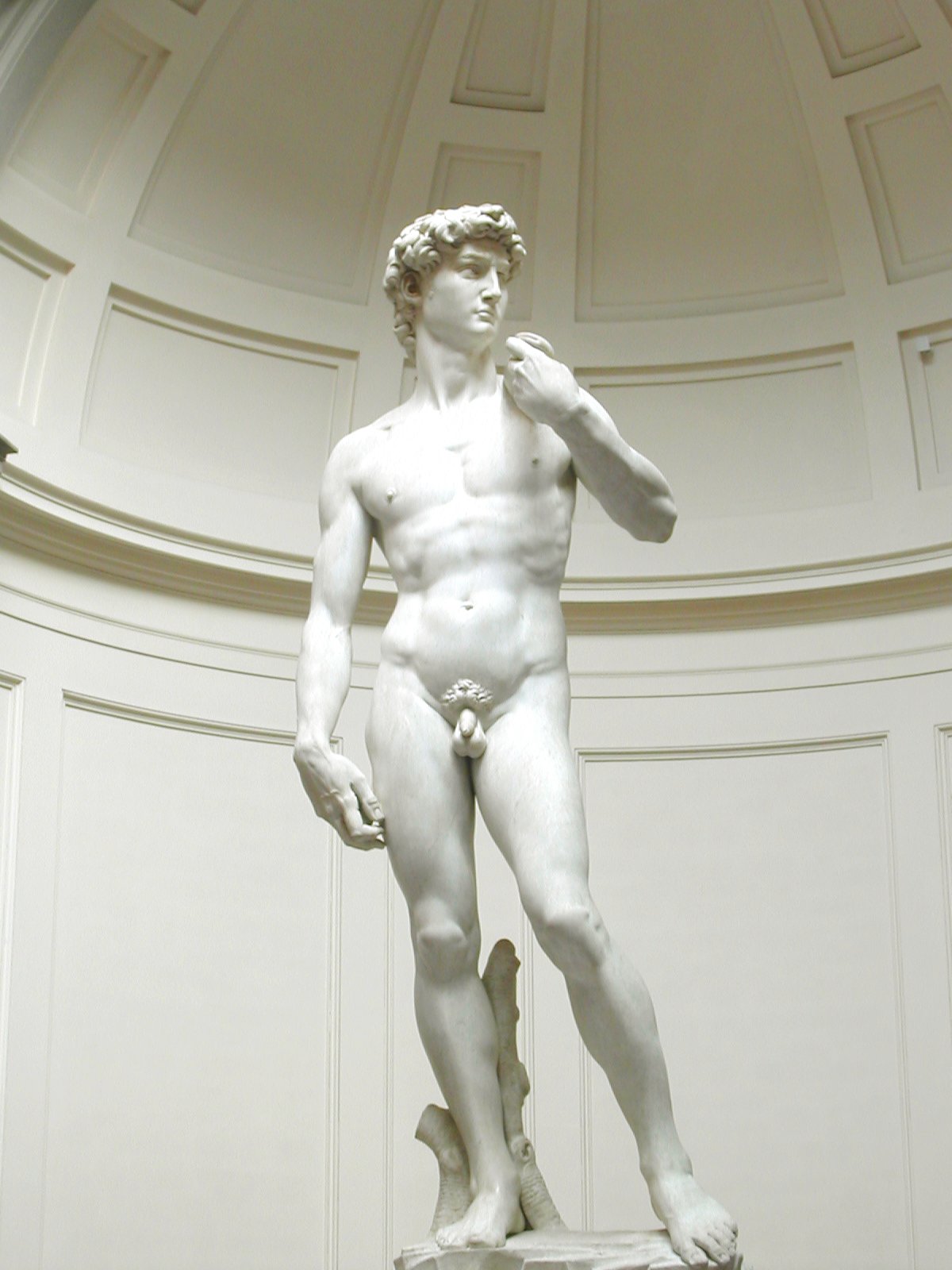 La Lente · tap to zoom
David
Carrara marble · 5.17 meters
Galleria dell'Accademia, Firenze
The Art · Firenze
La Lente · tap to zoom
Lo Studio · The Study
The block had a name — il Gigante — and a bad reputation. Seventeen feet of Carrara marble, quarried in 1464, it had been gouged and abandoned by two sculptors and left standing in the cathedral workshop yard for thirty-five years. The marble was declared too tall, too shallow, too 'spoiled.' Michelangelo, twenty-six years old, asked for it anyway and worked it for three years behind a fence of his own building.
Every David before his — Donatello's, Verrocchio's — is a boy after the battle, sword in hand, the giant's head underfoot. Michelangelo carved the moment before instead: the sling just settling on the shoulder, the weight rocking back on the right leg, the brow tightening as the eyes measure something enormous out of frame. The victory is nowhere in the marble; the decision is everywhere.
The anatomy carries the theology. The right hand — oversized, veins risen, knuckles heavy — is the only outsized feature, the old iconographer's signal of the manu fortis, the strong hand of God working through a shepherd. Tension gathers in it like the held breath of the whole figure.
He stood outdoors in Piazza della Signoria for 369 years — lightning-struck, stoned in riots, his left arm once broken in three places by a thrown bench — until 1873, when Florence walked him indoors to a purpose-built skylit tribune in the Accademia. The replica that holds his old post still gets the rain.
Una Nota Da Portare Dentro
The block everyone called spoiled held the figure everyone now calls perfect — the eye that sees potential is the whole art.